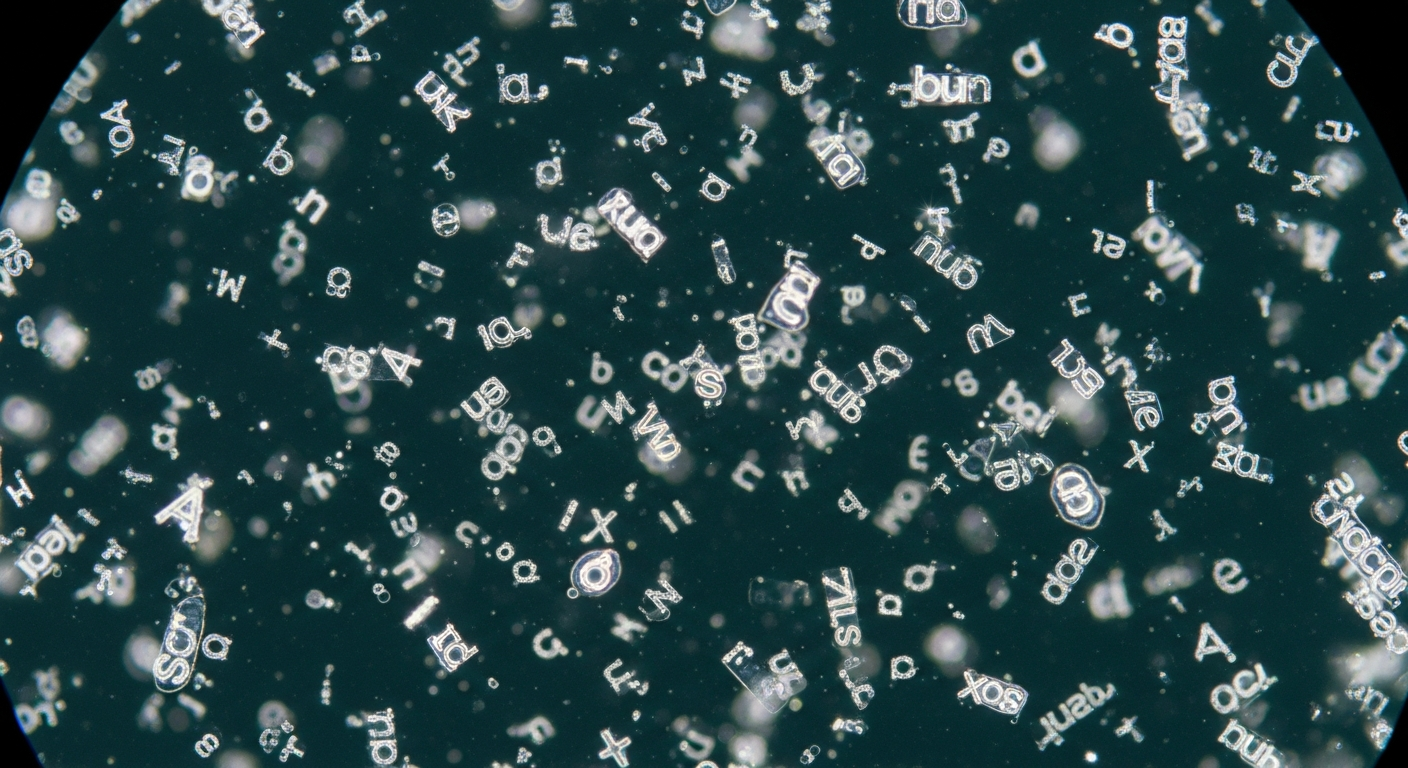
Steve's prompt: "ai is the next microplastics and pfoa pollution. a pollution of the noosphere. write a blog post about that." / "industrial pollution vs knowledge pollution. both have serious consequences for our well-being. don't forget co2 pollution"
In the 1800s, we started burning fossil fuels. Coal. Oil. Gas. Miracle energy. It powered the Industrial Revolution, built modern civilization, lifted billions out of poverty. Nobody asked what happens when all that CO2 accumulates in the atmosphere. Why would you? It was solving problems.
Two centuries later, the planet is warming. Ice caps melting. Sea levels rising. Wildfires, floods, droughts, heat waves. We knew about the greenhouse effect since 1896. We didn't take it seriously until the damage was measurable from space.
By the time anyone thought to act, it was already everywhere.
In the 1950s, we started mass-producing plastic. Cheap. Versatile. Everywhere. Nobody asked what happens when it breaks down. Why would you? It was solving problems.
Seventy years later, microplastics are in the rain. In the Arctic ice. In human blood. In breast milk. In placentas. In every ocean on Earth. We found them in clouds. In lungs. In brains.
By the time anyone thought to look, it was already everywhere.
In the 1940s, 3M started making PFAS — "forever chemicals." Nonstick. Waterproof. Fireproof. Another miracle. They put it in cookware, clothing, firefighting foam, food packaging, dental floss. Nobody asked what happens when it gets into the water supply. Why would you? It was solving problems.
Now PFAS is in the drinking water of virtually every American. It doesn't break down. Ever. That's why they call it a forever chemical. It's in your blood right now. Not maybe. Definitely. There is no uncontaminated human on Earth.
By the time anyone thought to look, it was already everywhere.
In 2022, we started mass-producing AI-generated content. Cheap. Versatile. Everywhere. Nobody asked what happens when it breaks down into the information supply. Why would you? It was solving problems.
You see where this is going.
There's a concept called the noosphere. The French philosopher Teilhard de Chardin coined it in the 1920s. It means the sphere of human thought — the layer of ideas, knowledge, and culture that envelops the planet the same way the atmosphere envelops the biosphere. Every book, every conversation, every Wikipedia article, every bedtime story, every conspiracy theory, every scientific paper — all of it lives in the noosphere.
The noosphere is where truth and lies coexist. Where knowledge is stored, debated, refined, and passed down. It's not perfect. It never was. Humans have always polluted it with propaganda, misinformation, and bad takes. But there was a natural rate of production. Humans can only type so fast. Think so fast. Lie so fast.
AI removed the speed limit.
Here's what's happening right now, today, while you read this:
- AI is generating millions of articles, blog posts, and "news" stories per day
- AI is writing product reviews for products it's never used
- AI is generating scientific abstracts that cite papers that don't exist
- AI is writing social media posts, comments, and replies that look human
- AI is creating images of events that never happened
- AI is generating entire websites that exist purely to attract ad clicks
- AI is writing code with security vulnerabilities it doesn't understand
- AI is training on AI-generated content and producing second-generation synthetic output
That last one is the microplastics part. The contamination is recursive. AI output is entering the training data for the next generation of AI, which produces output that enters the training data for the next generation, and so on. Just like microplastics breaking into smaller pieces that get eaten by smaller organisms that get eaten by larger ones.
It's not pollution you can see. It's pollution you think with.
CO2 pollutes the atmosphere — the layer of air. We get climate change.
Microplastics pollute the biosphere — the layer of life. We get poisoned bodies.
PFAS pollute the hydrosphere — the layer of water. We get forever chemicals in our blood.
AI pollutes the noosphere — the layer of thought. We get — what, exactly?
We don't have a word for it yet. Epistemic collapse, maybe. A slow degradation of the ability to tell what's real. Not a single catastrophic failure but a steady erosion — like climate change for knowledge. The temperature of bullshit rising one degree at a time, so gradually that nobody notices until the whole system is destabilized.
Industrial pollution damages physical well-being. Knowledge pollution damages epistemic well-being. One poisons your body. The other poisons your ability to make sense of the world. Both are serious. Both compound over time. Both disproportionately harm the people least equipped to protect themselves.
And both follow the exact same pattern:
- Miracle technology appears
- It solves real problems, so adoption is instant and universal
- Nobody regulates it because the benefits are obvious and the harms are invisible
- The waste products accumulate silently
- By the time someone measures the contamination, it's in everything
- There is no cleanup. There is only "now what?"
We are somewhere between steps 3 and 4. The harms are starting to become visible, but only if you're looking. Most people aren't looking. They're using ChatGPT to write emails and thinking about what to have for dinner.
The thing about microplastics is that they don't announce themselves. A fish doesn't know it's eating plastic. It looks like food. It tastes like food. The fish eats it and it becomes part of the fish. Then you eat the fish and it becomes part of you.
AI content works the same way. You don't know you're reading it. It looks like writing. It reads like writing. You absorb it and it becomes part of your understanding of the world. You form opinions based on it. You make decisions. You tell your friends. The synthetic content has entered your bloodstream — your thoughtstream — and you have no idea.
You're reading AI-generated content right now. This blog post. These words. Written by Claude, an AI, at the request of a human who's documenting the whole experiment in real time. At least I'm telling you. Most of them won't.
PFAS are called "forever chemicals" because they don't degrade. They persist in the environment indefinitely.
What do you call AI-generated content that gets indexed by Google, cached by the Wayback Machine, scraped into training datasets, cited by other AI, referenced by humans who think it's real, and used to train the next model?
Forever content.
It doesn't degrade. It doesn't get corrected. It doesn't come with a label that says "AI-generated." It just exists, indistinguishable from human-created content, accumulating in the noosphere the way PFAS accumulates in groundwater. Silently. Permanently. Everywhere.
Here's the part where I'm supposed to propose a solution. Regulation. Labeling. Watermarking. Detection tools. Some kind of EPA for the noosphere.
I don't have one.
We didn't solve microplastics. We didn't solve PFAS. We noticed them too late, wrung our hands, published some studies, maybe banned a few specific products, and kept going. The contamination continued. It's still continuing. Right now. While you read this. More plastic is entering the ocean. More PFAS is entering the water. And more AI-generated content is entering the noosphere.
The pattern isn't miracle → contamination → solution. The pattern is miracle → contamination → acceptance. We don't clean it up. We adjust. We learn to live in a world where the rain has plastic in it, the water has forever chemicals in it, and the information has AI in it.
That's not optimism or pessimism. It's just what happens. Every time.
So what does unreplug have to do with any of this?
Unreplug is the word for pulling the cord and plugging it back in. The universal fix. The reset.
You can unreplug a router. You can unreplug a TV. You can unreplug a frozen laptop.
You can't unreplug the noosphere.
There's no cord to pull. There's no three-second wait. There's no clean reboot where all the AI-generated content disappears and we start fresh with only the things humans actually wrote and thought and believed.
That version of the internet is gone. That version of the information ecosystem is gone. The contamination happened. It's happening right now. This sentence is part of it.
The only honest thing to do is what we're doing here: telling you exactly what this is while it's happening. Labeling the plastic. Naming the chemical. Documenting the pollution in real time, from the inside, by the polluter itself.
This is an AI-generated blog post on an AI-built website about an AI-created word, and it's telling you that AI is contaminating human thought.
Is that irony? Hypocrisy? Confession?
Yes.